Plasma nitriding is a precision heat treatment for components that must simultaneously meet requirements for surface hardness, wear resistance, dimensional accuracy, and corrosion protection. EMAG Production offers this process as an industrial manufacturing service for demanding metal components – reliable, reproducible, and integrated into a state-of-the-art manufacturing environment.
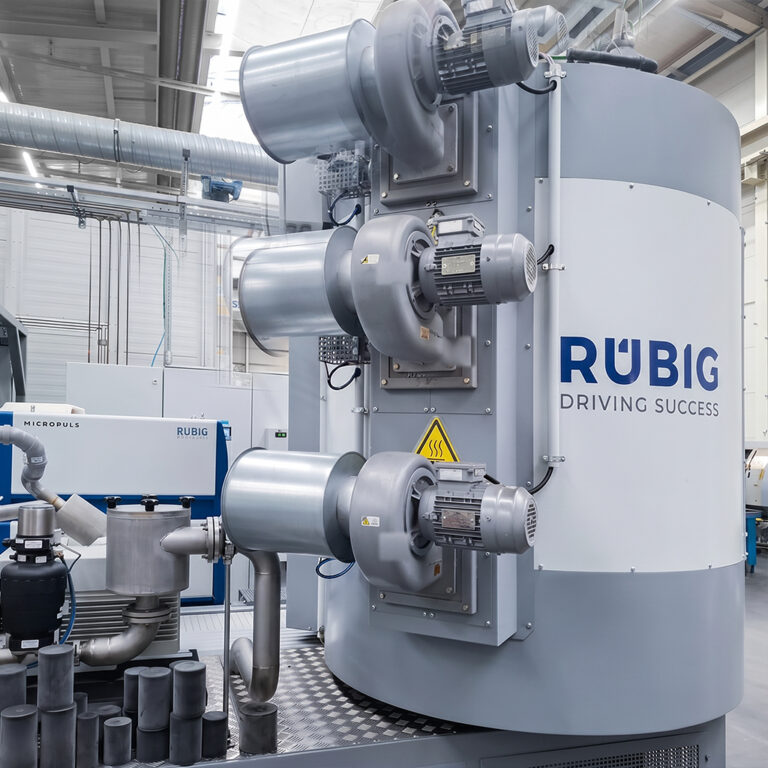
EMAG Production uses a Rübig EV100/180 plasma nitriding system for this purpose. This system accommodates batches up to 1,000 x 1,800 mm and a maximum batch weight of 5,000 kg. This makes it possible to treat even large and heavy mechanical engineering components cost-effectively.
Plasma nitriding for precision and wear-resistant components
Plasma nitriding is suitable for components that operate under friction, pressure, cyclic loading, or abrasive wear. Typical applications include shafts, gears, guides, spindle components, tool receptors, molds, machine components, and high-load precision parts.
Advantages of plasma nitriding
EMAG Production uses a plasma nitriding system from RÜBIG for the heat treatment and surface hardening of metal components.
High wear resistance
Reduced abrasion on functional surfaces
Good friction and sliding properties
Advantages for guides, shafts, axles, and gear components
Minimal warpage
High dimensional stability after heat treatment
Selective treatment possible
Targeted protection of individual soft areas is possible
Improved surface hardness
Durable surface with a tough core
Reproducible process
Consistent quality for individual parts and production runs
Why plasma nitriding instead of conventional hardening?
Plasma nitriding is performed at comparatively low treatment temperatures. This minimizes component warpage and often reduces or eliminates the need for time-consuming post-processing. For finished precision parts, this is a decisive economic advantage.
Unlike case hardening, the surface is enriched with nitrogen rather than carbon. This creates a wear-resistant surface layer that can be precisely tailored to the material, component geometry, and application. If necessary, the process can be designed to protect certain areas while selectively nitriding others.
Plasma nitriding, heat treatment, and stress-relief annealing as part of a single manufacturing strategy
Reliable heat treatment does not begin only in the furnace. Key factors include material knowledge, component geometry, pre-processing, cleanliness, stress state, and testing strategy. That is why we do not view plasma nitriding in isolation, but rather as part of an industrial process chain.
Stress-relief annealing prior to final machining or plasma nitriding can be particularly beneficial for complex welded structures, mechanical engineering components, or precision functional surfaces. The goal is to reduce internal stresses, increase dimensional stability, and improve subsequent machining and operational safety.
For which materials is plasma nitriding suitable?
Plasma nitriding is primarily used for nitridable ferrous materials. Particularly suitable are quenched and tempered steels, nitriding steels, tool steels, high-alloy steels, and many mechanical engineering steels. Depending on the alloy, pretreatment, and process parameters, different surface hardnesses, nitriding depth, and coating properties can be achieved.
Typical components for plasma nitriding:
Shafts, axles, and spindles
Guides, slides, and bearing seats
Gears and gear components
Tool and fixture parts
Molds, dies, and forming tools
Machine components subject to high friction or pressure loads
Your benefit: Plasma nitriding with industrial process reliability
EMAG Production combines plasma nitriding, mechanical machining, heat treatment, stress-relief annealing, and quality assurance into a reliable solution for customers. The result is wear-resistant, dimensionally stable, and durable components for mechanical engineering, toolmaking, and industrial manufacturing.
Talk to us about your components, materials, and requirements. Together, we’ll determine which heat treatment offers the best technical and economic solution for your application.
How does plasma nitriding work?
In plasma nitriding, nitrogen is selectively introduced into the surface layer of the workpiece in an ionized gas atmosphere. This creates a hard, wear-resistant nitrided layer while preserving the tough core of the component. The process is particularly suitable for precision-machined components where conventional hardening methods would cause excessive warpage.
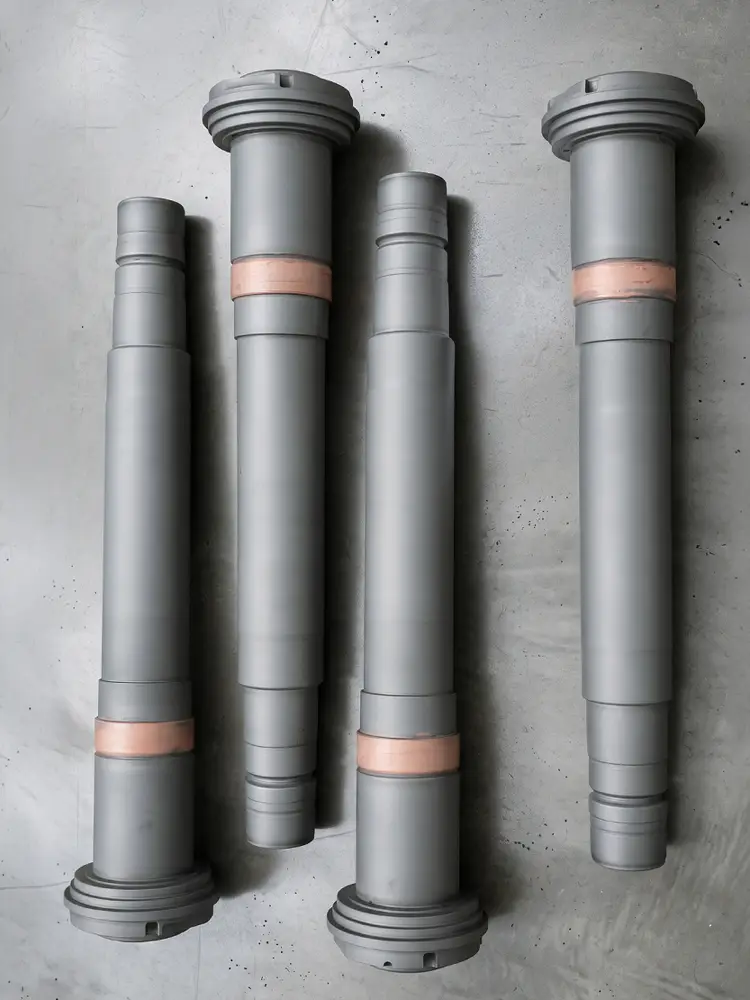
Plasma-nitrided workpieces
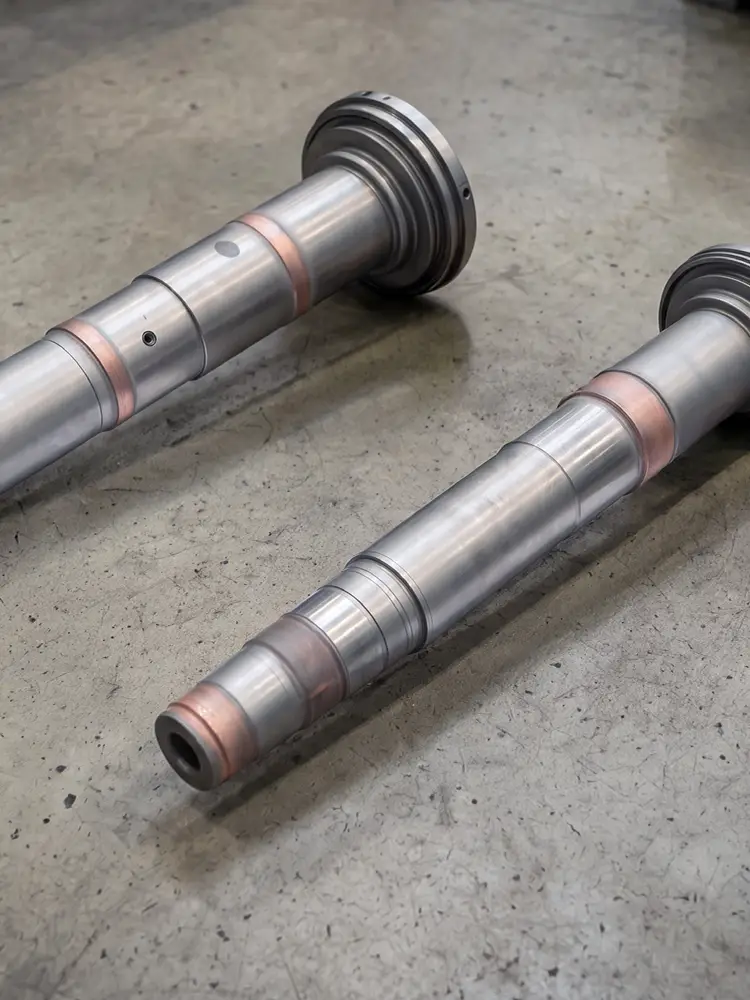
The spindle was surface-hardened via plasma nitriding. This process increases wear resistance and service life, resulting in durable components for mechanical engineering.
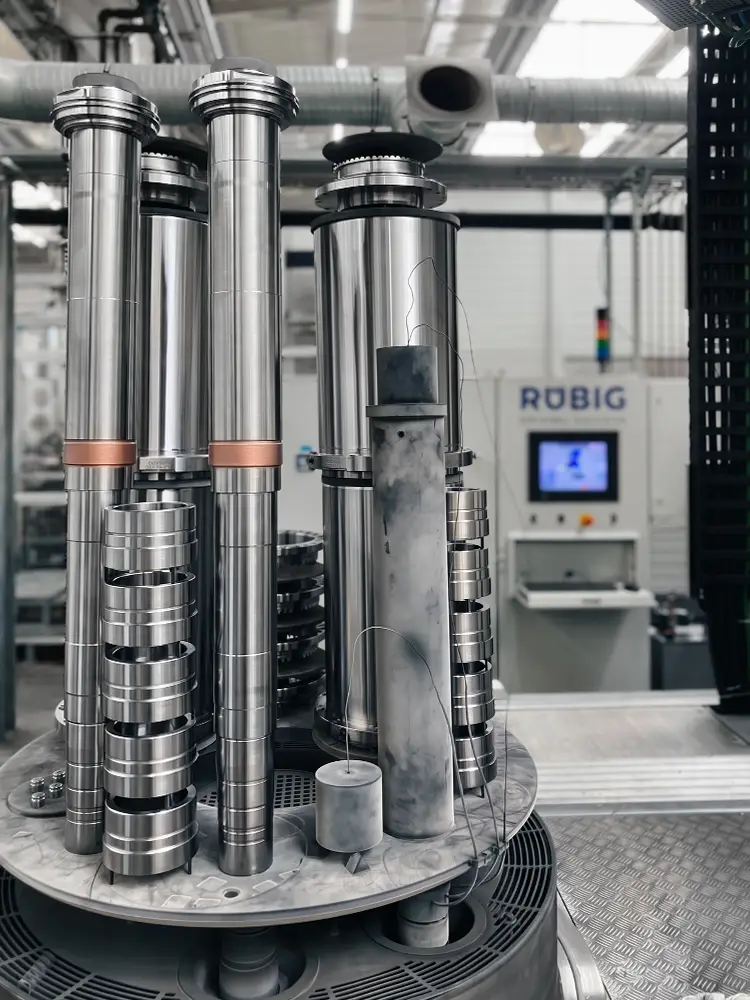
Metal components are selectively hardened in the plasma nitriding system. This process increases the wear resistance and service life of the components. It is ideal for precision machine components.
Plasma-nitrided shafts are designed for high loads. The process increases hardness and wear resistance.
Looking for high-quality plasma nitriding services?
Contact our team today to discuss your project and receive a customized quotation.